
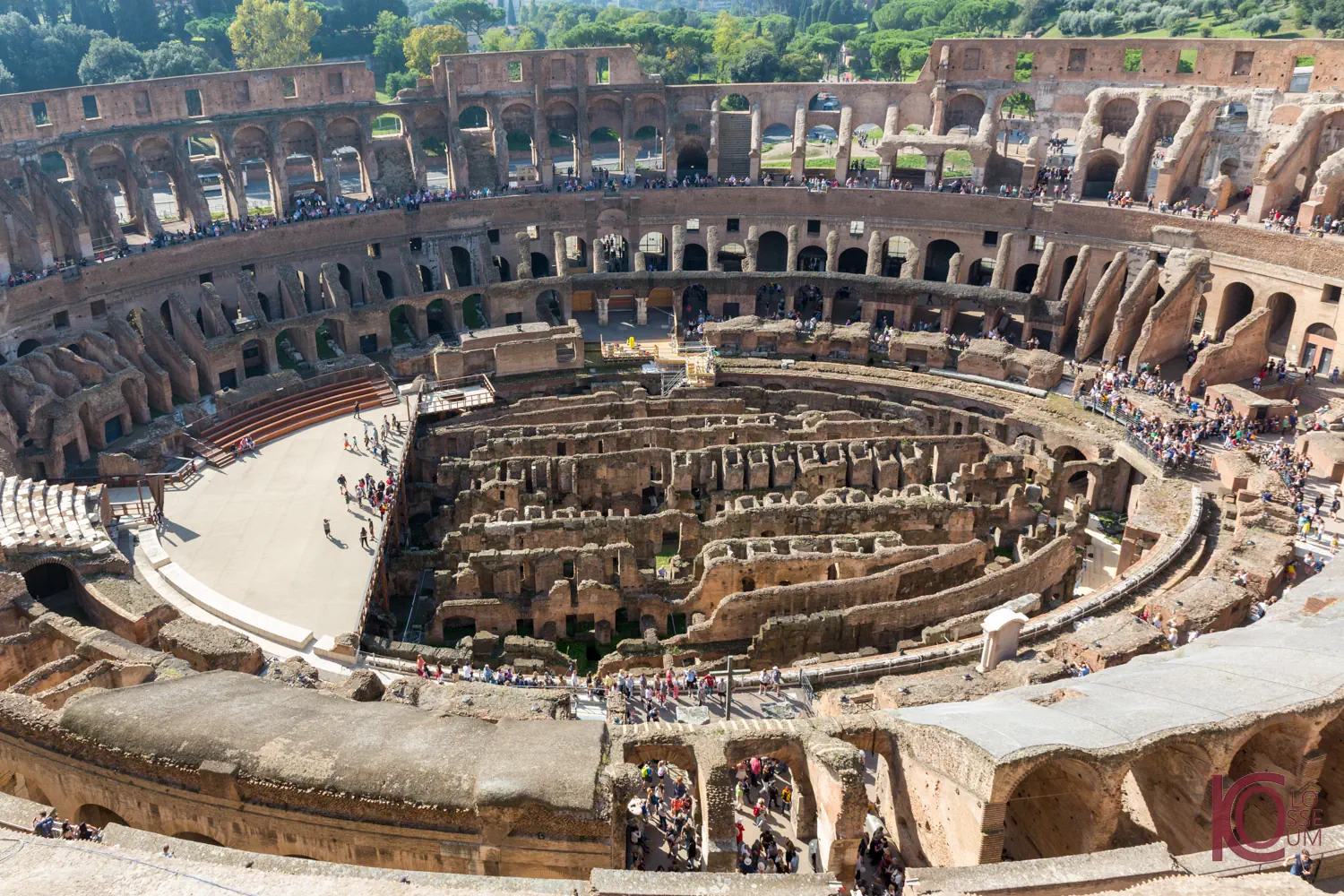
The Colosseum fascinates millions of visitors every year – and despite its worldwide fame, there are still parts of its architecture that are only now being fully understood. Recent research by Heinz-Jürgen Beste (German Archaeological Institute in Rome) and Rossella Rea (Parco Archeologico del Colosseo) now provides crucial clues as to what the most prestigious area of the entire amphitheater originally looked like: the podium and the imperial honorary box.
Visitors to the Colosseum today see mainly ruins. But the new scientific analyses reveal an astonishingly detailed picture that has long remained hidden from the public.
Why the podium was so important to the Romans
The podium was the most exclusive place in the entire amphitheater – an area that reflected social power and political influence. Here sat:
- on wide marble steps the senators in their honorary seats (honor bisellii)
- high-ranking family members
- selected guests of the Emperor
- and of course the ruler himself
Research shows that architecture and social hierarchy were inextricably linked in the Colosseum. The seats of the upper class were located directly next to the arena – with the best view, but also the highest risk.
Affiliate Disclosure
Archaeological search for clues: How the podium was reconstructed
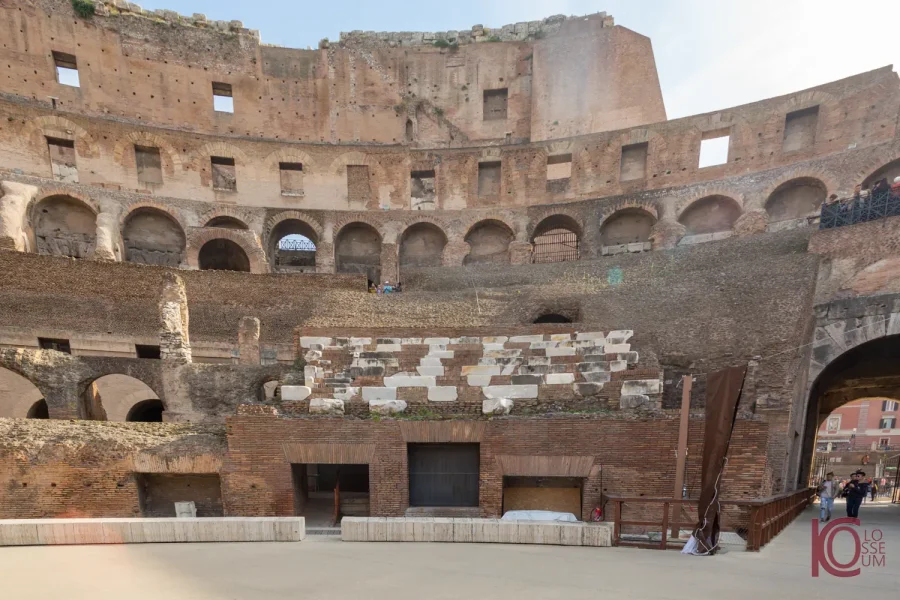
Because the podium wall area was almost completely eroded over the centuries, its original form remained a mystery for a long time. It was only through a combination of:
- 19th-century historical construction plans,
- detailed on-site analyses,
- new measurements and structural data,
- and comparisons with other Roman amphitheaters
that Beste and Rea were able to develop a convincing reconstruction.
Key findings:
The podium consisted of five wide marble steps
These offered sufficient space for up to 600 senators – far more room than other visitor groups had available in the cavea.
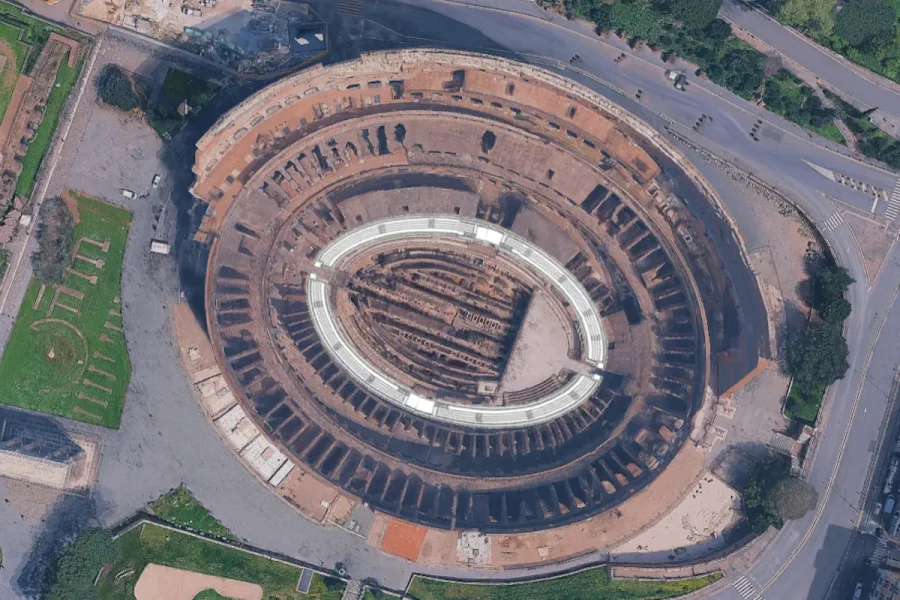
The wide, solid podium stabilized the construction of the cavea
This so-called “wall block” served to provide static support for the entire cavea and arena enclosure.
Special security zones protected the elite
The researchers found evidence that there was a separate safety corridor between the podium and the arena – possibly with barriers or wooden structures that minimized the dangers posed by wild animals or condemned fighters.
This underscores how technically sophisticated the Colosseum already was in the 1st century AD.
Where did the Emperor sit? An old question – finally answered
One of the great mysteries surrounding the Colosseum concerned the position of the imperial box. Historians debated for decades whether the emperor sat in the north or south of the arena.
The new studies now provide very clear evidence:
→ The imperial lodge was most likely located in the northern area.
The reason:
There, a clear “negative imprint” can be seen in the masonry – exactly where a complex, elevated platform must have stood.
This is probably what the imperial box looked like:
- approximately 10,5 × 4 Meter large
- completely clad in marble
- Accessible via an elegant staircase
- significantly higher than the senators’ seats
- possibly with its own canopy or roof
- representative and clearly visible to all visitors
This makes it clear how strongly the Colosseum served as a stage for imperial self-promotion: the emperor was not just a spectator – he was the center of the entire spectacle.
New insights into the organization of the arena
Another exciting discovery concerns the two trapezoidal areas to the left and right of the main entrances to the arena.
Analysis suggests that
These areas probably served as carceres – waiting areas for large animals.
This would be a logical addition to the elaborate system of elevators and trapdoors that existed in the Flavian Colosseum. Animals that were too large to be lifted into the basement elevators were presumably held there until they were released into the arena.
This makes a glimpse behind the scenes of the games much more realistic – and brutal.
Why this research is important for visitors today
Anyone walking through the Colosseum today can see many of these insights directly in the building’s structure:
- The raised area in the north indicates the emperor’s box.
- The places where the podium wall once stood are now visible as gaps.
- The differences in the masonry show where senators, knights, and ordinary citizens sat.
- The arena appears deeper today because the historic floor has been worn away layer by layer over centuries.
The more we know about the Colosseum, the more impressive the visit becomes: you no longer see just walls—you recognize a perfect blend of architecture, power politics, and entertainment.
Click here for the original document of the study:
https://doi.org/10.34780/izc6-l6zf