The Colosseum is one of the most visited monuments in the world, yet much of what lies beneath its arena remained a puzzle for centuries. Since 1996, archaeologist Heinz-Jürgen Beste of the German Archaeological Institute (DAI) in Rome has been investigating the basement level, the hypogeum, in cooperation with universities and the Rome antiquities authority. His findings show how the Flavian Amphitheater was built, rebuilt and operated over roughly five centuries.

Affiliate Disclosure
In this report he describes the building phases of the amphitheater, the history of the excavation of its underground from 1806 onward, and the lift systems that raised animals and stage sets into the arena. Want to see the arena floor and the underground structures in person? Our guide to Colosseum arena and underground tickets shows how to get there.
Colosseum archaeology at a glance
- Construction: work probably began around AD 70–72; the amphitheater was inaugurated by Emperor Titus in AD 80
- Underground excavations: first attempt 1806–1814 (Carlo Fea), eastern basement 1874–1876, western basement 1934–1938
- Lift systems: three systems identified so far, installed between the end of the 1st century and the middle of the 4th century AD
- Arena floor: partially restored by the year 2000, covering about one seventh of the total area
Report by Heinz-Jürgen Beste, German Archaeological Institute (DAI) Rome
From Nero’s villa to the Flavian Amphitheater
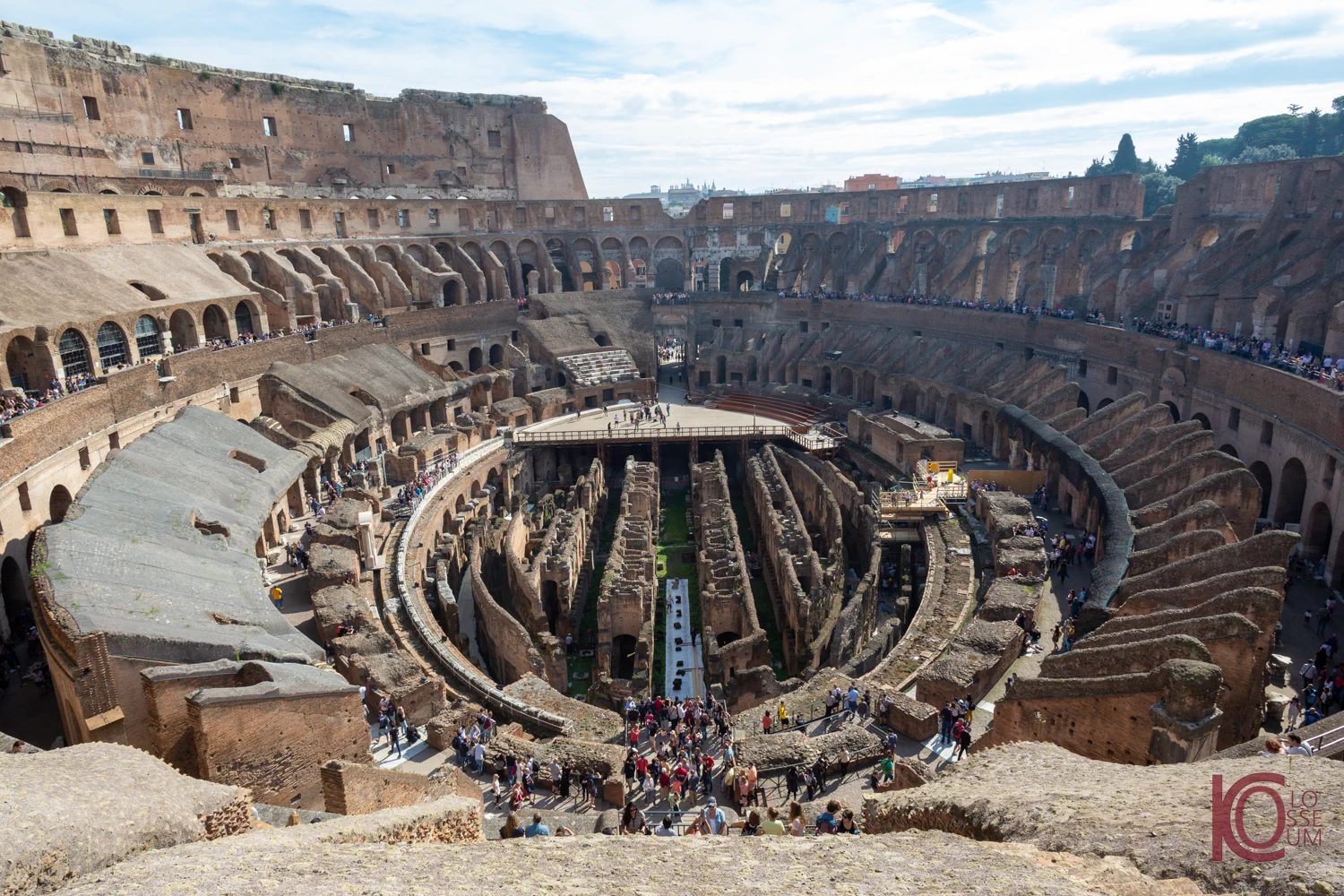
The Flavian Amphitheater ranks among the greatest achievements of Roman engineering. Its enormous dimensions, the short construction time of less than ten years, the capacity of fifty thousand spectators and the perfect organization of the flow of visitors bear vivid witness to this. The building shaped the Roman amphitheater for good, as the great theaters in Italy and in the provinces built on its model show.
After the city fire of AD 64, Emperor Nero had converted the area between the Esquiline, Caelian and Palatine hills into his private villa, the Domus Aurea. Under Emperor Vespasian it was given back to the public and built over with public buildings, with the Colosseum at their center. Work probably began between AD 70 and 72. Gladiator schools, depots for weapons and stage decoration, and further infrastructure were part of the complex. The amphitheater was inaugurated in AD 80 by Emperor Titus. During the hundred-day inauguration celebration, a naval battle was staged in the Colosseum in addition to gladiator fights and animal hunts. The entire complex was probably completed in the nineties of the first century AD. The last recorded animal hunt took place in AD 523, and from then on the building largely served as a quarry. The name Colosseum only came about in the eighth century.
Excavating the underground: from Carlo Fea to the 1930s
The Colosseum itself has stood above ground since antiquity. What had to be excavated was the basement level beneath the arena floor. The first systematic excavation of the underground was carried out from 1806 to 1814 by the Roman archaeologist Carlo Fea. Because of the high groundwater level, the dig soon had to be stopped and backfilled. Only in 1874–1876 was it possible to uncover the eastern part of the basement level. The western part, which had remained buried until then, was excavated between 1934 and 1938 – unfortunately without any documentation. During the extensive restoration carried out as part of this work, a large part of the ancient building fabric was lost.
Three lift systems in the hypogeum
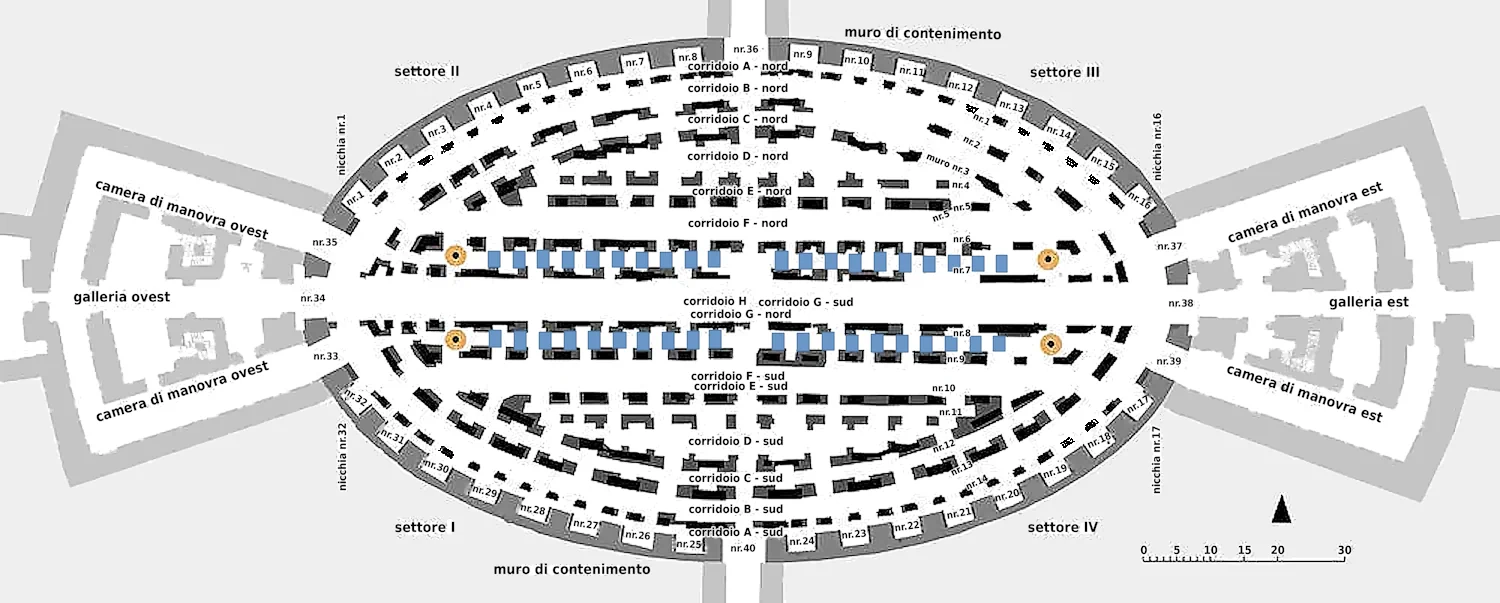
The investigation and documentation of the podium and the basement level, which I began in 1996 at the DAI Rome in cooperation with the Rome antiquities authority, made it possible to distinguish several building phases from the half millennium of use. So far, three different systems can be located, whose installation dates between the end of the 1st century (AD 81–96) and the middle of the 4th century AD. Two of the lift systems, those in corridors B, F and H, belong to the construction phase of the Colosseum on the basis of structural details and can therefore be dated to the Flavian period.
Corridor B: 28 cages for animals
In corridor B, a lift system with 28 cages could be identified. It was used to transport animals up to the size of a big cat or a bear into the arena.
Corridors F and H: platforms for large decorations
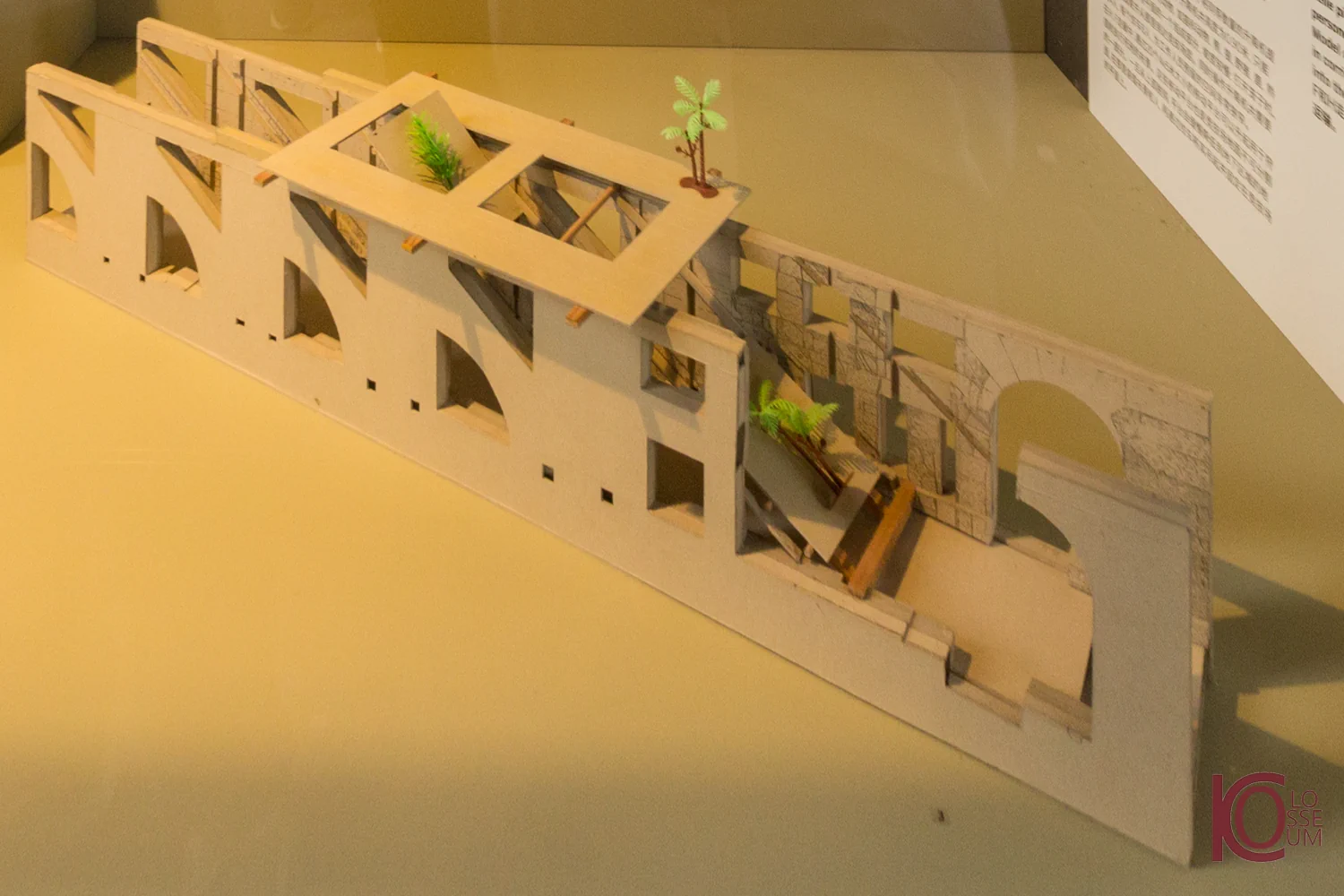
Corridors F and H complement the basement lift system with a system of 20 movable platforms of roughly 4 × 5 m. They were used to haul up large-scale decorations, giving the staged hunt (venationes) its theatrical setting.
After the fire of AD 217: corridors E and G
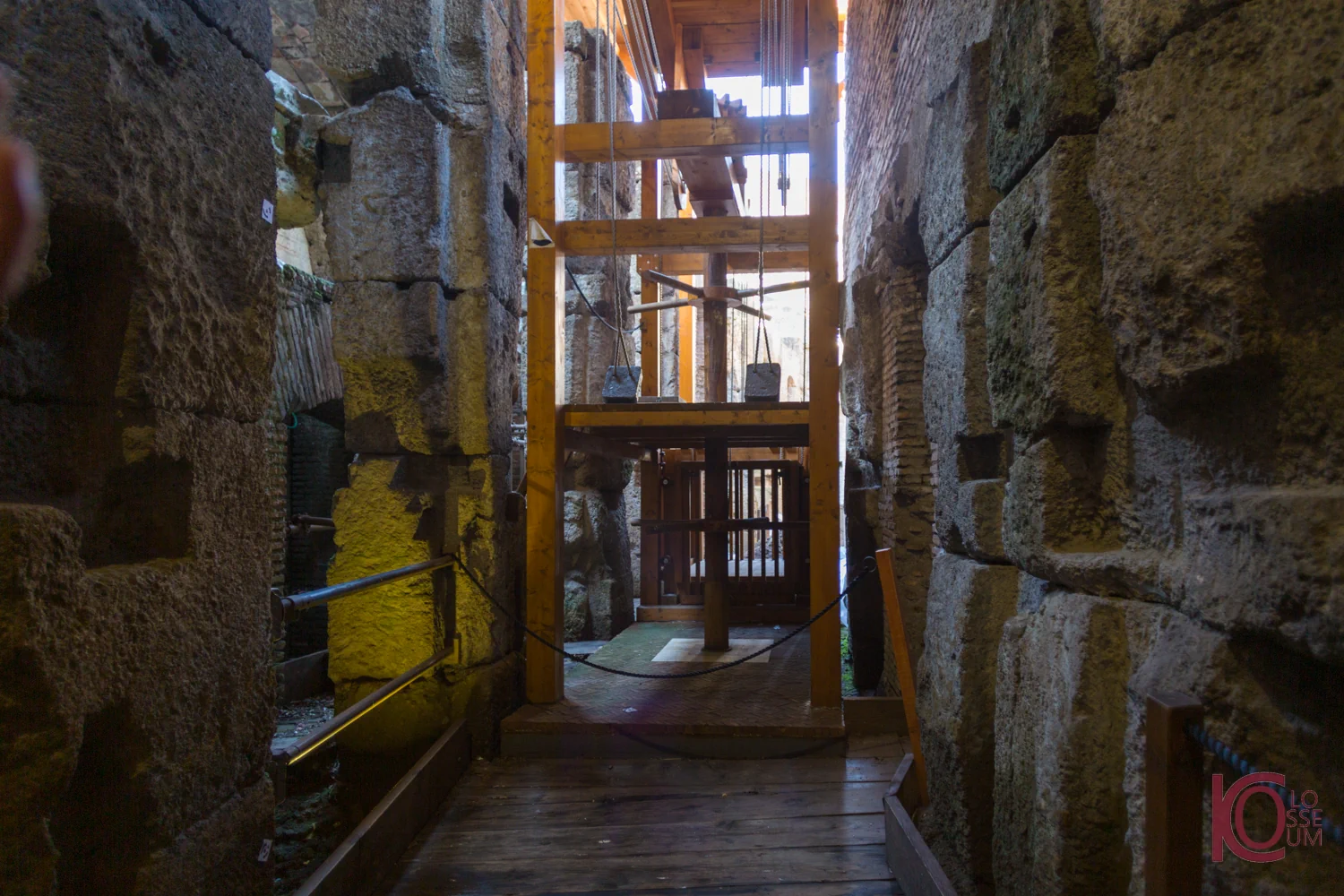
After a lightning strike set the Colosseum on fire in AD 217, restoration work dragged on for almost twenty years. The walls in the basement level had to be stabilized, which made the two earlier lift systems unusable. A new lift system was therefore built in corridors E and G, with which as many as 60 cages could be moved. Because of the lack of space in these corridors, however, the earlier lift model – winch, cage, winch, cage and so on – had to be abandoned, and several cages were hauled up with a single winch.
Naumachia, senators’ seating and the arena floor
Beyond the function of the basement level, the research also allowed statements about the location and course of the naval battle (naumachia) staged at the inauguration and about the arrangement of the seating rows for the senators.
The antiquities authority’s wish to restore the arena floor was met by the year 2000 in cooperation with La Sapienza University. For didactic and conservation reasons, only about one seventh of the total area in the east of the arena was covered. This part had been so badly destroyed by the excavation and subsequent restoration of 1875 that the new support system could be placed on the ancient foundations without difficulty. The debate over this project showed that the floor of the arena was completely renewed at least twice in antiquity, its walking level raised and its wooden construction fundamentally altered.
Frequently asked questions about Colosseum archaeology
Who is Heinz-Jürgen Beste?
 Heinz-Jürgen Beste is an archaeologist at the German Archaeological Institute (DAI) in Rome. Since 1996 he has been investigating the podium and the basement level of the Colosseum in cooperation with the Rome antiquities authority.
When was the Colosseum built?
Work probably began between AD 70 and 72 under Emperor Vespasian. Emperor Titus inaugurated the amphitheater in AD 80, and the whole complex was probably finished in the nineties of the first century AD.
What is the hypogeum of the Colosseum?
The hypogeum is the basement level beneath the arena floor. It housed the lift systems that raised animals and stage sets into the arena during the games.
How did the lifts in the Colosseum work?
Winches hauled cages and platforms up from the hypogeum to the arena. Corridor B had 28 cages for animals, corridors F and H had 20 platforms of roughly 4 × 5 m for large decorations, and after the fire of AD 217 a new system in corridors E and G could move as many as 60 cages.
When was the Colosseum’s underground excavated?
Carlo Fea led the first systematic excavation from 1806 to 1814, the eastern part was uncovered in 1874–1876, and the western part was excavated between 1934 and 1938, unfortunately without documentation.
Is the arena floor of the Colosseum original?
No. Only about one seventh of the arena, in the east, has been covered again; this was done by the year 2000. The research showed that the floor was completely renewed at least twice in antiquity.
Can I visit the hypogeum today?
Yes, but only with the right ticket. The underground is open on a guided tour that comes with the Arena ticket. See our guide to Colosseum arena and underground tickets.
Read more about the Colosseum
- Colosseum History: From Nero’s Lake to a World Wonder – the full timeline from Nero’s lake to today’s restoration
- Podium and imperial box – new insights into the most prestigious seats
- Colosseum tickets: prices, types and where to buy
- What happened in the Colosseum: games, logistics and the ancient lifts – another report by Heinz-Jürgen Beste